
How to straighten your hair without frying it: choosing the right straightener for your hair type
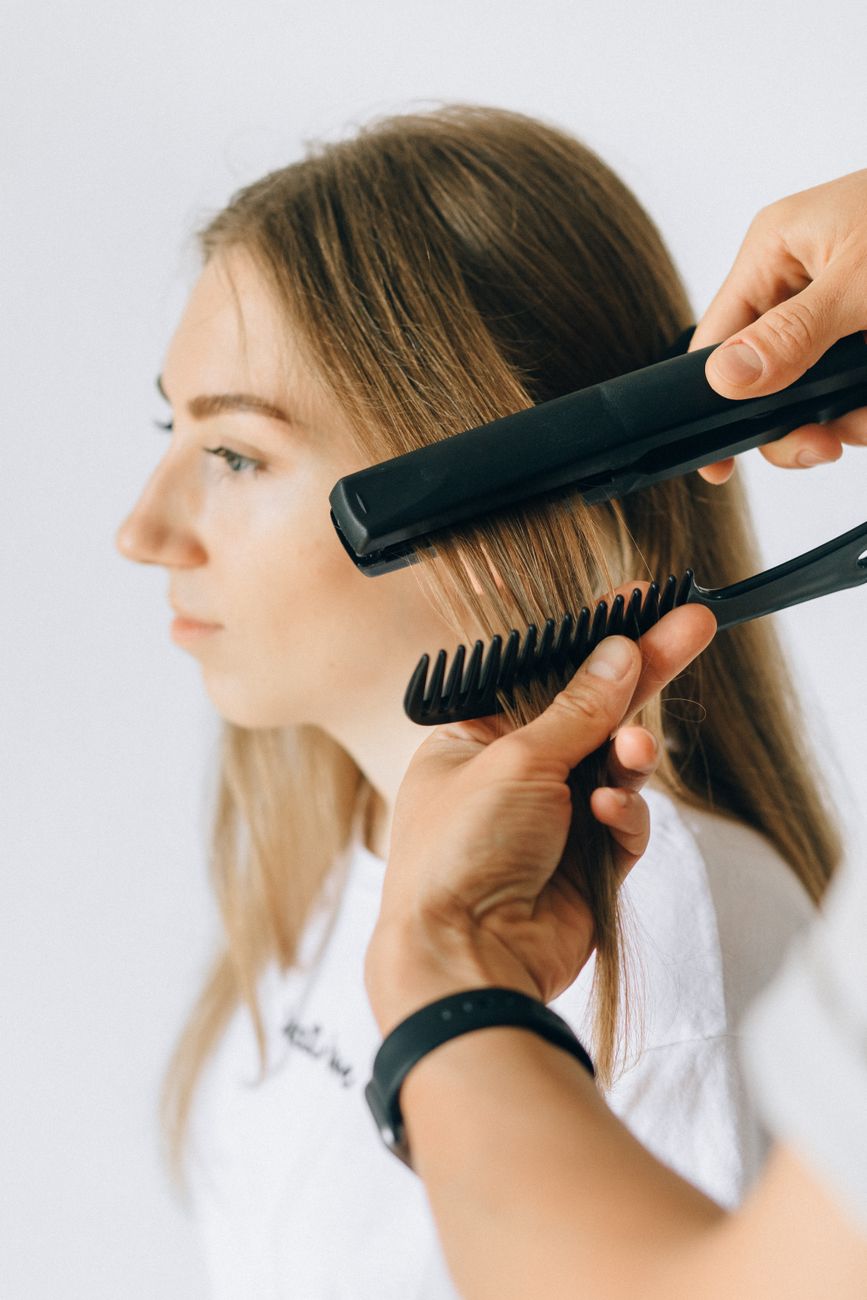
How to straighten your hair without frying it: choosing the right straightener for your hair type
If your ends look dry and your hair feels rougher after a few months of daily styling, the flat iron is usually the reason. Straightening works by using heat to break and re-form the hydrogen bonds inside each strand, which is what lets a wave relax into a smooth line. Push that heat too high and you stop reshaping the bond and start cooking the hair: the cuticle, the shingled outer layer that keeps moisture in, lifts and cracks, and the protein underneath starts to degrade. That is where the frazzled, straw-like ends come from. The good news is that most of the damage people blame on straightening comes down to two fixable things, the temperature you use and whether the tool actually suits your hair. Get both right and you can straighten often without wrecking your hair.
Why heat damage happens, and where most people go wrong
The single biggest mistake is turning the dial as high as it will go because it feels faster. It is not faster in any way that helps you. Once the plates are hotter than your hair needs, each pass does more harm than the last, and you end up going over the same section again because the style will not hold on scorched, brittle hair. Damaged hair does not take a smooth finish well, so people respond by adding more heat, which is how a small problem becomes a haircut.
Wet or even slightly damp hair is the other common trap. Water inside the strand turns to steam under a hot plate and forces the cuticle open from the inside, which is why straightening damp hair can leave a faint sizzle and a lot of breakage. Dry your hair fully first, and put a heat protectant between the plate and your strands every single time. A protectant will not make high heat safe, but it slows the transfer and buys you a margin.
Getting the temperature right
The temperature you style at matters more than how many times you run the iron over a section. Around 185°C is the sweet spot: hot enough to reshape the hair and hold a smooth finish, but below the point where the cuticle starts to scorch, with settings above about 190°C beginning to cause internal damage. That is the temperature ghd engineers every one of its stylers around, and ghd’s hair straightener range runs from 15mm slim plates for fringes and short cuts up to 43mm wide plates that cover thick or long hair in fewer passes. Fewer passes at a controlled temperature is how you get a sleek result without the frazzled ends.
This is worth knowing when you shop, because a lot of irons advertise a top temperature of 230°C as though a higher ceiling is a feature. For most hair it is a liability. A tool that holds one steady, sensible heat is doing you more good than one that lets you overshoot. ghd is a professional hair-tool brand with more than 25 years of heat-styling experience, and its irons lock to a fixed 185°C rather than giving you a dial to push, with ceramic plates that spread heat evenly and an automatic shut-off if you walk away. Even heat matters as much as the number: cold and hot spots across a plate mean you press harder and linger longer on the patches that are not gripping, and that is exactly where damage collects.
Match the plate to your hair length and thickness
Plate width is the part shoppers most often get wrong, and it changes your result more than any coating or marketing term. The rule is simple. Narrow plates give you control in small areas, wide plates cover ground quickly.
If you have a fringe, a pixie, a short bob or closely cropped layers, a slim plate around 15mm lets you get close to the root and work around your face without the iron feeling clumsy. Slim plates also double as a gentle curling tool on short hair, which a wide plate simply cannot do. For medium-length hair, a standard plate near 20 to 26mm is the flexible middle ground that handles both smoothing and a soft bend at the ends.
Long or thick hair is where wide plates earn their place. A plate in the 40mm-plus range grabs a bigger section per pass, so you cover a full head in a fraction of the strokes. That is the whole point, because every extra pass is another dose of heat. Someone with dense, waist-length hair using a narrow iron might run it over the same lengths five or six times, which does far more damage than one clean pass with a wide plate at a safe temperature. If your hair is thick and coarse rather than just long, the width helps even more, since coarse strands need firm, even contact to relax properly.
Technique does half the work
The tool sets your ceiling, but how you use it decides whether you reach it. Work in sections no thicker than the plate can heat through in one pass, roughly two to three centimetres, and clip the rest out of the way. Cramming too much hair between the plates is a hidden cause of damage: the outer strands get all the heat and the inner ones barely change, so you go back over the section and double the exposure.
Move steadily and do not stop. A slow, continuous glide beats holding the iron in one spot, which is where you get that scorched line. One pass should be enough on hair that is properly dried and protected. If it is not, the problem is upstream, in your prep or your temperature, and adding passes will not fix it.
Curly and textured hair deserves a note here, because it is more porous and takes on heat faster than fine straight hair, so it can look smooth at a lower setting and damage more easily at a high one. Start conservative and treat frequent flat-ironing of tightly curled hair as an occasional style rather than a daily habit.
The short version
Buy for your hair, not for the biggest number on the box. If your hair is fine or short, a controlled heat and a narrower plate protect you. If it is thick or long, a wide plate at a steady temperature gets you smooth in fewer passes, which is the real way to straighten without the damage. Dry your hair, use a protectant, keep the heat sensible, and let one good pass do the job. Your ends will thank you in about a month.
FTC Disclaimer: Keep in mind that I may receive commissions when you click links and make purchases. However, this does not impact my reviews.
