
Beyond the Jersey: Athletes Who Became Global Brand Icons
Michael Jordan did not need a slogan to explain what he represented. By the mid-1980s, Nike had turned his on-court presence into a commercial language of its own, and the Air Jordan line pushed athlete endorsement beyond the usual logo-and-poster formula. The athlete became part of the product itself.
That model now stretches across football, tennis, cricket and combat sports. A strong ambassador deal works because fans already associate the athlete with something specific: performance, style, discipline or cultural reach. Fashion houses, sportswear companies and betting brands are buying access to that existing meaning, not trying to manufacture it from scratch.
Jordan: When the Endorsement Became the Product
Nike launched the Air Jordan 1 in 1985, and the shoe quickly escaped the boundaries of basketball equipment. Jordan’s name, silhouette and playing style gave the line a cultural identity that survived long after individual seasons.
That is still the benchmark for athlete branding. The most valuable ambassadors do more than appear in advertisements; they give a brand a story and a set of associations that audiences already understand.
Beckham and Ronaldo Took Football Into Fashion
David Beckham helped normalize the footballer as a fashion figure. His appeal moved from elite football into tailoring, grooming and luxury campaigns without forcing audiences to forget the player underneath.
Cristiano Ronaldo pushed that model into the social-media era. Fitness, fashion and a tightly controlled visual identity became extensions of the same public persona. Matchday supplied sporting credibility; the hours between matches gave sponsors far more room to work with.
MelBet Has Built an Ambassador Roster Across Three Sporting Cultures
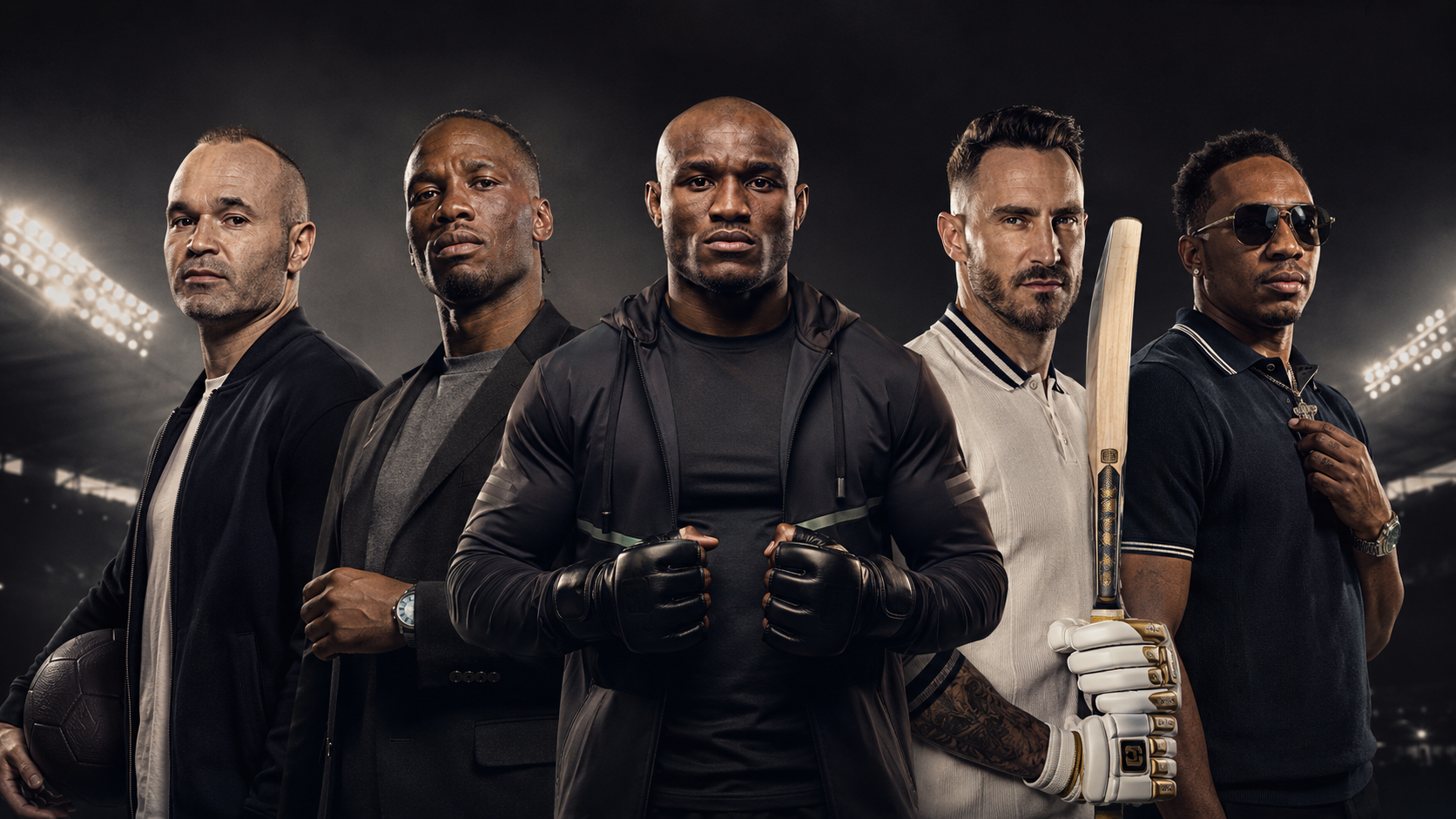
MelBet has used a multi-sport ambassador strategy rather than relying on one celebrity face. Andrés Iniesta and Didier Drogba bring football history, Kamaru Usman connects the brand with MMA, while cricket has featured Faf du Plessis and, in 2026, Dwayne Bravo. Du Plessis joined MelBet as a global ambassador in 2022 under an announced three-year agreement, so he belongs in the brand’s ambassador history rather than being presented here as a confirmed current 2026 partner.
That range mirrors the way sportsbook audiences behave. Football bettors may focus on match winner, handicap and player markets, cricket followers track runs, wickets and innings totals, and MMA fans assess round or method-of-victory prices. On Melbet, those sports sit inside the same betting ecosystem, with pre-match lines, live prices and statistics changing as events develop. An ambassador can create recognition, but injuries, form, team news and live match conditions still move the market. The face attracts attention; the sporting data decides whether a price makes sense.
MelBet’s broader sports strategy also includes institutional partnerships. Juventus has publicly confirmed MelBet as a regional partner, while Saint Lucia Kings, MI Cape Town and OG Esports have also appeared in the company’s partnership portfolio. MelBet’s own platform additionally identifies the brand as a media partner of Spanish LaLiga, a distinction worth keeping separate from club or individual ambassador agreements.
Dwayne Bravo Was Built for Life Beyond the Boundary
Bravo is a useful example because his public profile never stopped at the scorecard. The former West Indies all-rounder built recognition across international cricket, franchise leagues, music and entertainment, then moved into a mentorship role with Kolkata Knight Riders after retiring from professional cricket.
T20 cricket helps create this kind of portability. Players change franchises and competitions, but their personality, reputation and fan base travel with them.
Serena Williams and Naomi Osaka Wrote a Different Playbook
Women’s tennis has produced clear examples of athlete-led fashion power. Serena Williams extended a championship career into fashion, jewelry, investment and business, while Naomi Osaka has worked across sport and fashion without allowing the commercial image to overwhelm the athlete.
The lesson is not that every champion needs a clothing label. Brands gain more from athletes who already have a recognizable point of view; style and off-court interests can increase commercial value without replacing sporting achievement.
The IPL Turns Cricketers Into Media Properties
The IPL compresses sport, celebrity, sponsorship and television into a short annual window. One strong innings can move from a live broadcast to social feeds, sponsor creative and highlight packages within hours.
That visibility also feeds a dense betting market. A top-order batter, a death-overs bowler and an all-rounder create different statistical questions even when all three are equally famous. During a match, an ipl betting app can present markets on match winner, top batter, wickets, powerplay totals and in-play prices as the required run rate changes. Celebrity status does not replace analysis: batting position, recent form, pitch behavior and the opposition attack remain more useful than name recognition alone. The star may dominate the campaign artwork, but match context still determines the price.
Fame Is Only the Starting Point
The strongest partnerships look obvious in retrospect because the athlete and the brand were already speaking to the same audience. Jordan belonged with basketball footwear. Iniesta and Drogba carry football authority beyond retirement, Usman brings combat-sports credibility, and Bravo offers a rare mix of cricket and entertainment.
Follower counts can amplify a campaign, but they cannot create fit on their own. Product, sport, audience and timing still have to match. When they do, the logo feels less pasted onto the athlete and more like part of an existing public identity.
FTC Disclaimer: Keep in mind that I may receive commissions when you click links and make purchases. However, this does not impact my reviews.
