
What Is Method Dressing? The Celebrity Press Tour Explained
Method dressing is when an actor’s press-tour wardrobe references the character, story, setting or visual world of the film or television project they are promoting.
It can be as literal as recreating a Barbie doll, as recognisable as wearing green for Elphaba, or as specific as turning tennis whites into a wardrobe for Challengers. But after covering these tours look by look, I’ve found that the most interesting examples usually go beyond simply matching a colour to a character.
A stylist can pull from a character’s actual wardrobe, personality or profession. A recurring motif can connect the clothes to the story. Sometimes the period or setting becomes the reference point. And occasionally, as we saw with Dune, the clothes aren’t really about the character at all; they’re about making the actor look as though they belong in the film’s world.
That’s why method dressing has become such a major part of press-tour fashion. The clothes are no longer separate from the promotion; increasingly, they’re another way of selling the story.
Is Method Dressing New?
As much as people want to credit Law Roach and Zendaya with the phenomenon, actors dressing in ways that connect to their films isn’t new. What has changed is how extensively the idea is now carried through a promotional tour.
Instead of one themed premiere look, we can now see a visual thread running through photocalls, interviews, screenings and premieres across several cities for weeks or even months.
Social media has inevitably changed how we experience it too. Every look is photographed, compared and decoded almost immediately. The references can even arrive before the clothes do. Law Roach has been known to post the archival look or inspiration for a Zendaya appearance before she has even reached the red carpet, so by the time we see her, we already know what we’re looking for.
The term method dressing may be relatively recent, but the practice has become far more organised, visible and, in some cases, elaborate.
And not every actor approaches it in the same way.
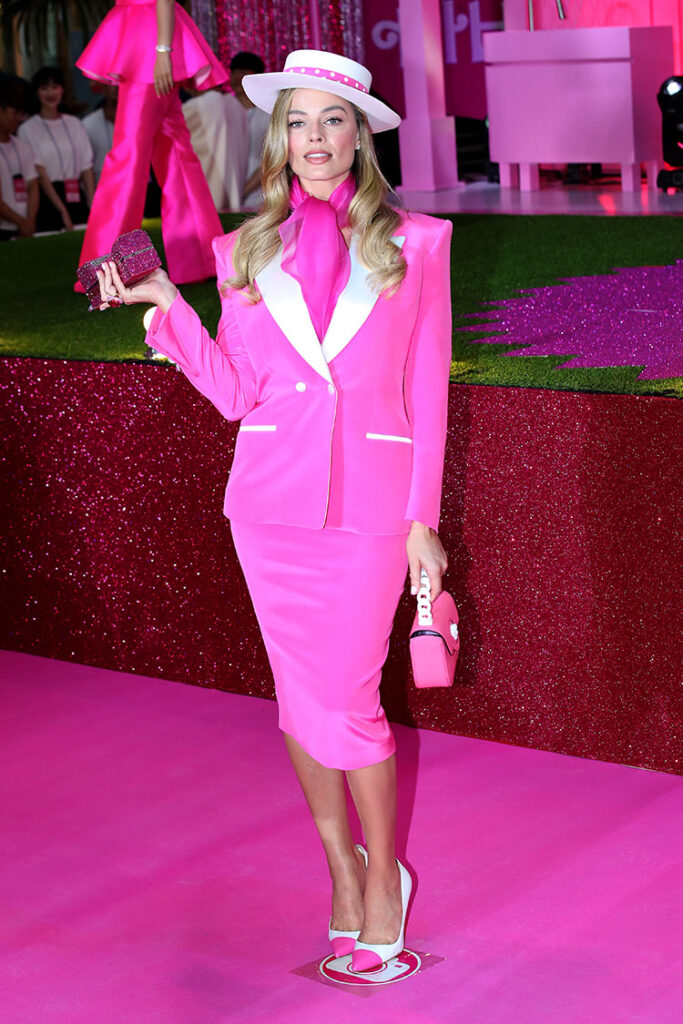

Margot Robbie Serves Up ‘Day to Night’ Barbie For The Seoul Premiere In Versace
Recreating the Source Material: Margot Robbie, Barbie
If one press tour made method dressing impossible to ignore, it was Margot Robbie’s Barbie tour.
Margot and stylist Andrew Mukamal didn’t simply decide that she should wear pink for several months. They went into Barbie’s fashion history, recreating specific dolls and outfits from different decades with designers including Versace, Schiaparelli, Vivienne Westwood and Balmain.
Two of the best examples demonstrated just how specific the references could become.
Versace recreated 1985’s Day to Night Barbie, giving Margot both the daytime and evening looks, while Daniel Roseberry recreated 1960’s Solo in the Spotlight Barbie in Schiaparelli Haute Couture.

There wasn’t much decoding required. You could place the doll alongside Margot and immediately understand what you were looking at.
That is method dressing at its most literal, but Barbie had an advantage few films can match: decades of fashion history to work with. The team could keep changing the silhouette, era and designer while remaining completely faithful to the same character.

Dressing for the Character: Cynthia Erivo and Ariana Grande, Wicked
Wicked showed how one film can produce two completely different method-dressing wardrobes.


Cynthia Erivo in Louis Vuitton for the Wicked LA premiere and Balenciaga for the Wicked For Good New York premiere
For Cynthia Erivo, green was the obvious Elphaba reference, but it was never the whole story. Emerald appeared alongside black and onyx, while dramatic nails, hats, jewellery and stronger silhouettes extended the character connection beyond simply wearing Elphaba’s signature colour.

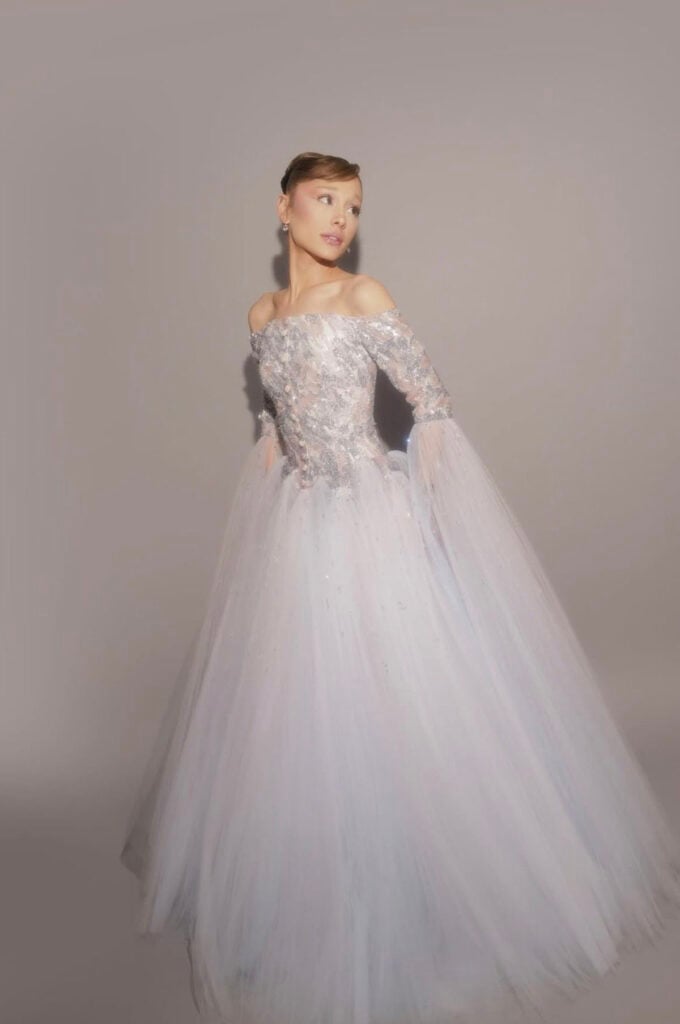
Ariana Grande in Vivienne Westwood To The Wicked Sydney Premiere and Thom Browne To The Wicked For Good Singapore Premiere
Ariana Grande’s Glinda wardrobe existed at the opposite end of the spectrum. Pink was joined by blush, white and pale pastels, with tulle, bows, floral details and romantic silhouettes reinforcing Glinda’s ultra-feminine image.
What made the pairing interesting was that Cynthia and Ariana didn’t need to dress alike for the theme to make sense. They were promoting the same film through two separate character identities.
Across such a long promotional cycle, that distinction also gave both women considerably more room to develop their wardrobes.
My roundups, Cynthia Erivo: The Year of Elphaba and Ariana Grande’s Glinda-Inspired Press Tour: A Pink-Tinted Journey, showed just how long those character codes lasted. Emerald, onyx and pink appeared well before the first Wicked premiere and continued throughout awards season.

Turning a Character Aesthetic Into Fashion: Jenna Ortega, Wednesday
Jenna Ortega’s Wednesday press tours demonstrate what happens when the character provides an aesthetic rather than a series of outfits to recreate.
There was no need for Jenna to spend an entire tour dressed in versions of Wednesday Addams’ Nevermore Academy uniform.
Instead, black became the foundation, while lace, gothic detailing, sheer fabrics, corsetry and occasional school-uniform references kept the connection intact.
That gave Jenna and her stylists far more room to work with designers without losing Wednesday along the way. One appearance could be overtly gothic, another could use a single detail, and another could simply work within the darker palette associated with the character.
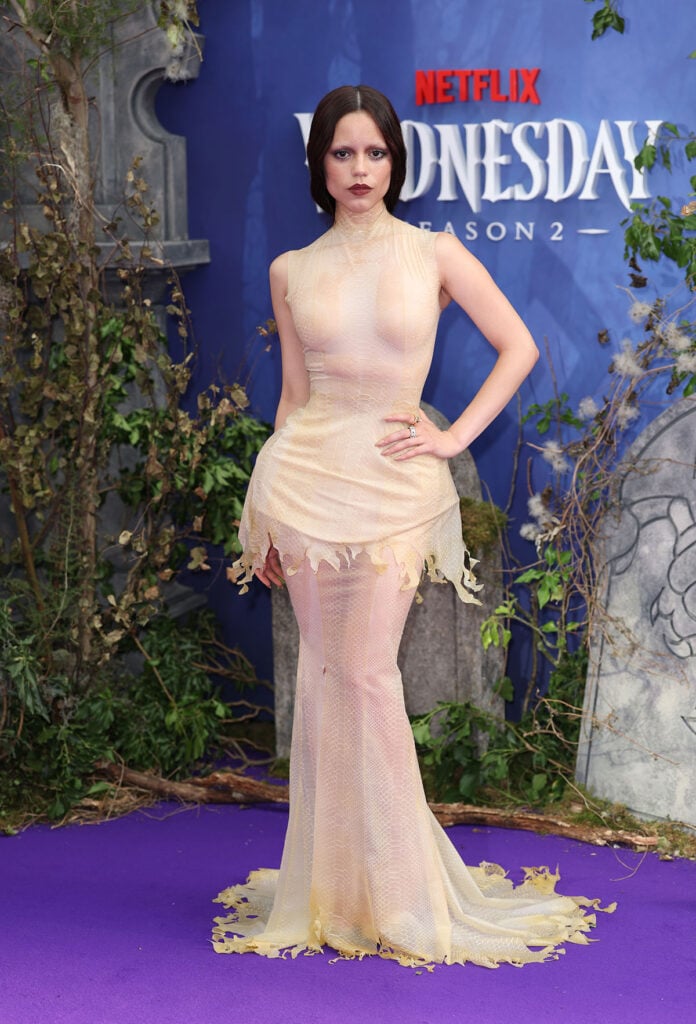
By the time we reached the Season 2 tour, however, we’d already seen the obvious Wednesday references. Repeating the first tour wasn’t going to be enough.
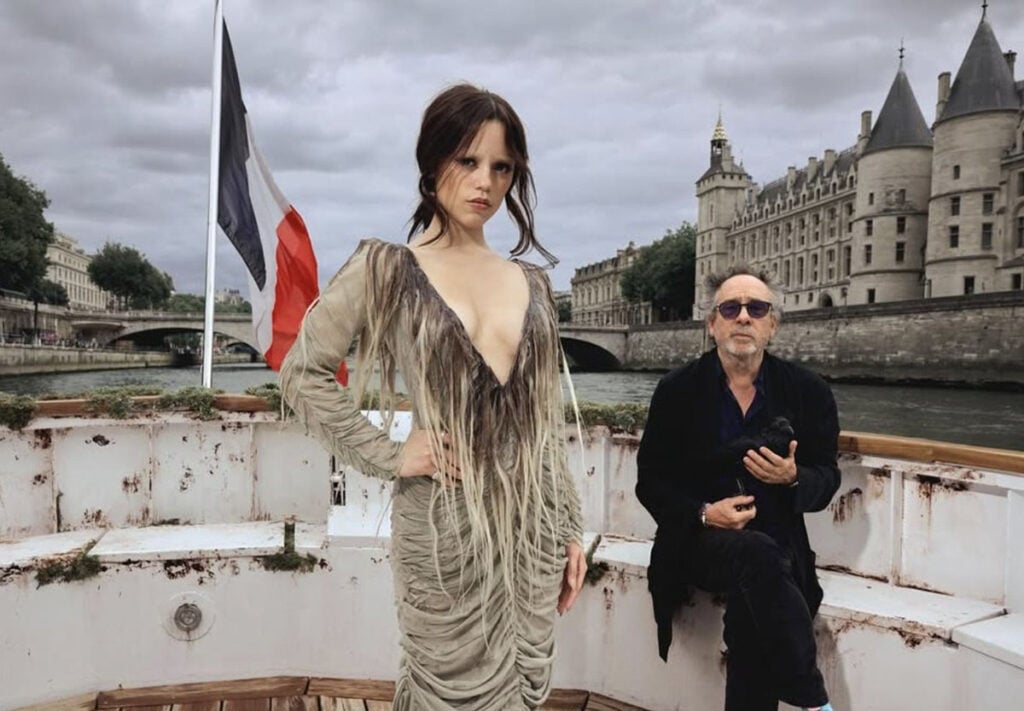
This time the fashion became more extreme. For the London premiere, Jenna wore a snakeskin Ashi Studio Haute Couture look, while the Paris photocall gave us Elena Velez’s wet-look dress with hair appliqué. Even Jenna’s bleached eyebrows became part of the transformation, pushing her beauty look further into the eerie aesthetic surrounding Wednesday.
I enjoyed that evolution. The second tour didn’t abandon the character references that had worked the first time; it found stranger and more interesting ways to express them.
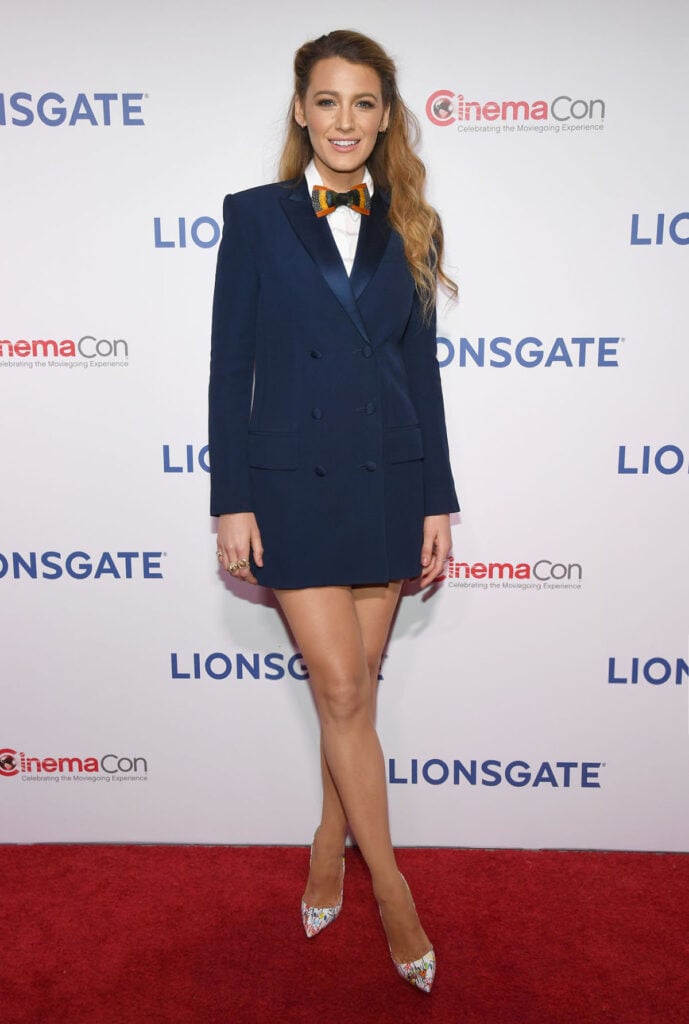
Using the Character’s Wardrobe: Blake Lively, A Simple Favor
Method dressing doesn’t always need a signature colour or motif. Sometimes the character’s own wardrobe provides everything a stylist needs.
Blake Lively’s Emily Nelson in A Simple Favor had a strong relationship with tailoring, so suiting became the recurring link throughout Blake’s promotional wardrobe.
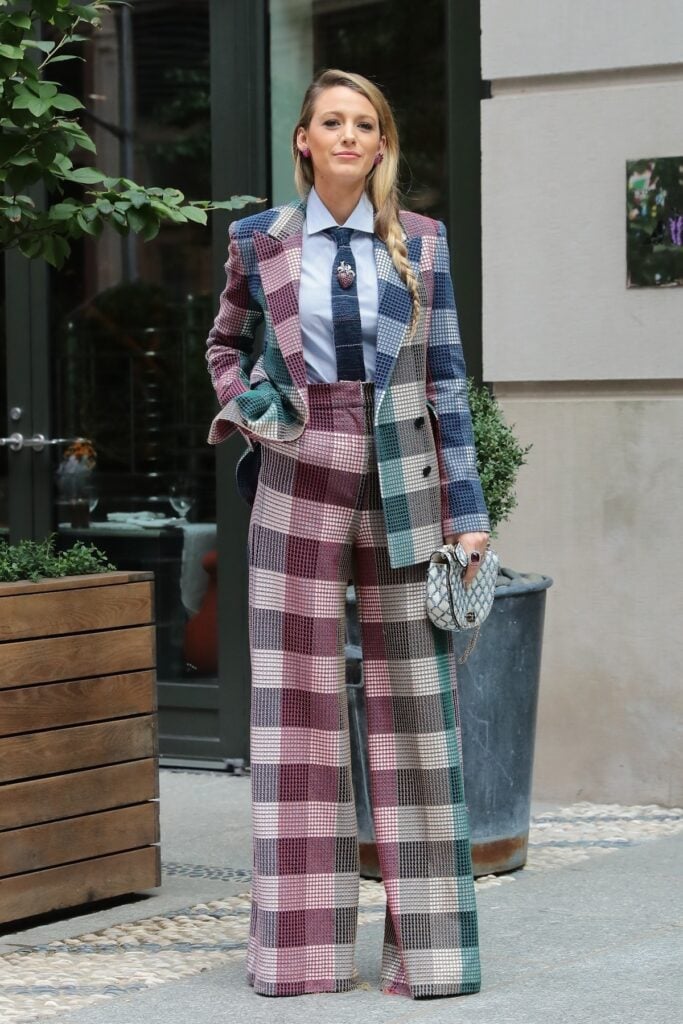
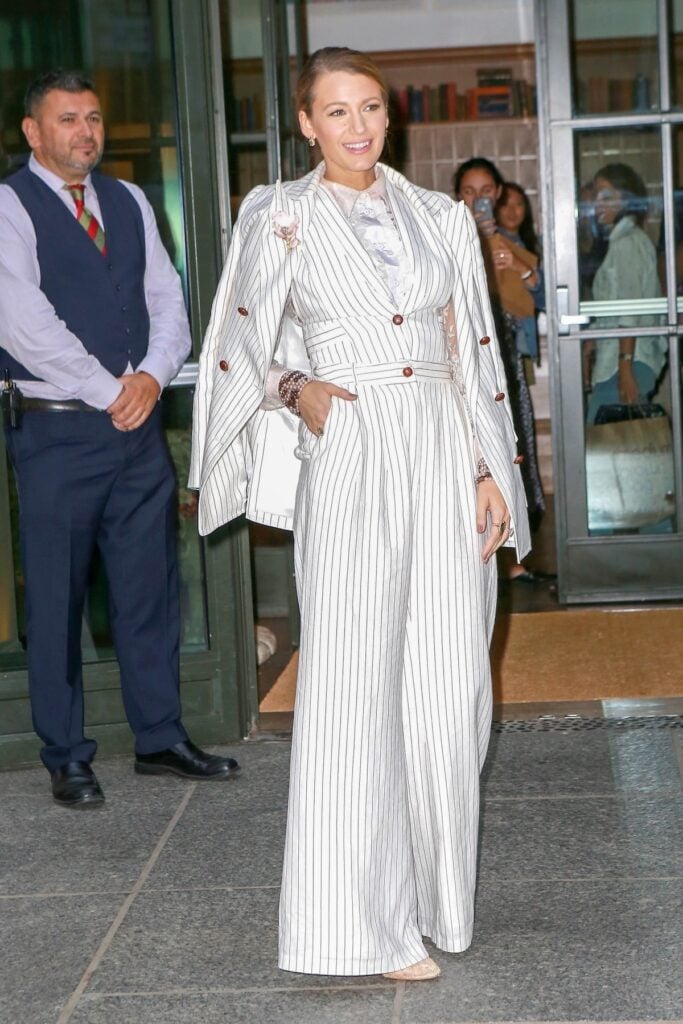
Blake Lively in Roland Mouret and Zimmermann promoting A Simple Favor in New York
Suit after suit appeared across the tour, ranging from classic three-piece tailoring to more modern interpretations.
The connection wasn’t one particular costume. It was the way Emily dressed.
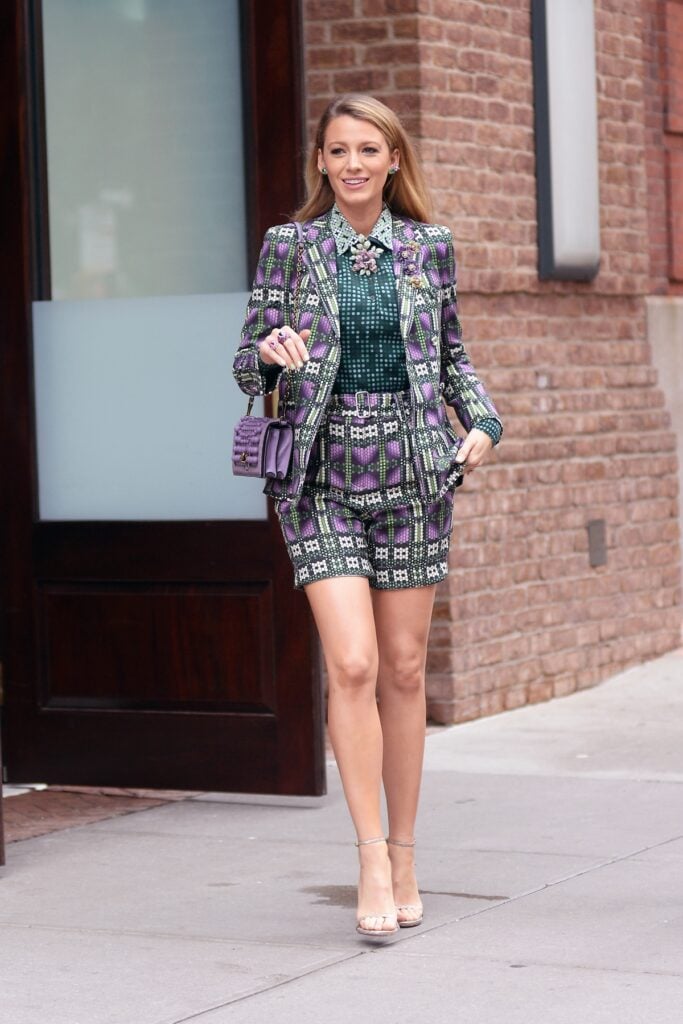
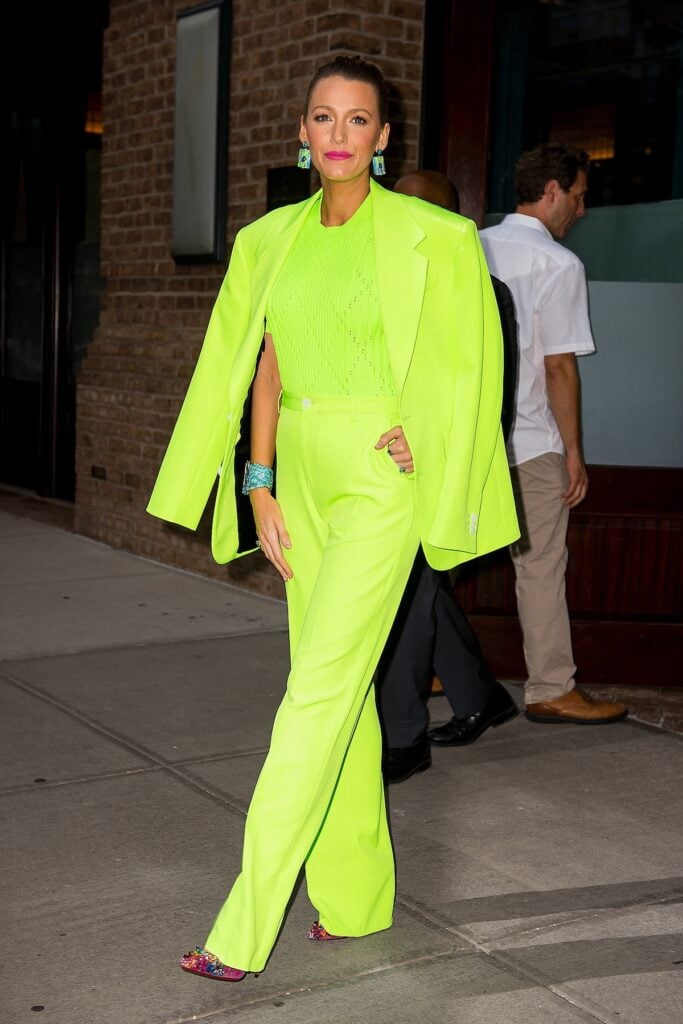
Blake Lively in Bottega Veneta and Versace promoting A Simple Favor in New York
That makes A Simple Favor an important example because it expands the definition of method dressing beyond colours and visual motifs. A garment category can do the same job when the character already has a distinctive fashion identity.
My coverage captured Blake deep into the tailoring theme, by which point the suits had become as much a part of the promotion as the film itself.

Using the Character’s Profession: Blake Lively, It Ends With Us
Six years later, Blake returned to method dressing for It Ends With Us, but this time her character’s profession supplied the theme.
Lily Bloom owns a flower shop, so florals became the foundation of the press tour.
Blake wore floral prints, embroidery and appliqués, incorporated flowers into her hair and even found room for a floral-print motorcycle jacket. This wasn’t a reference that appeared once or twice. She committed to it for months.
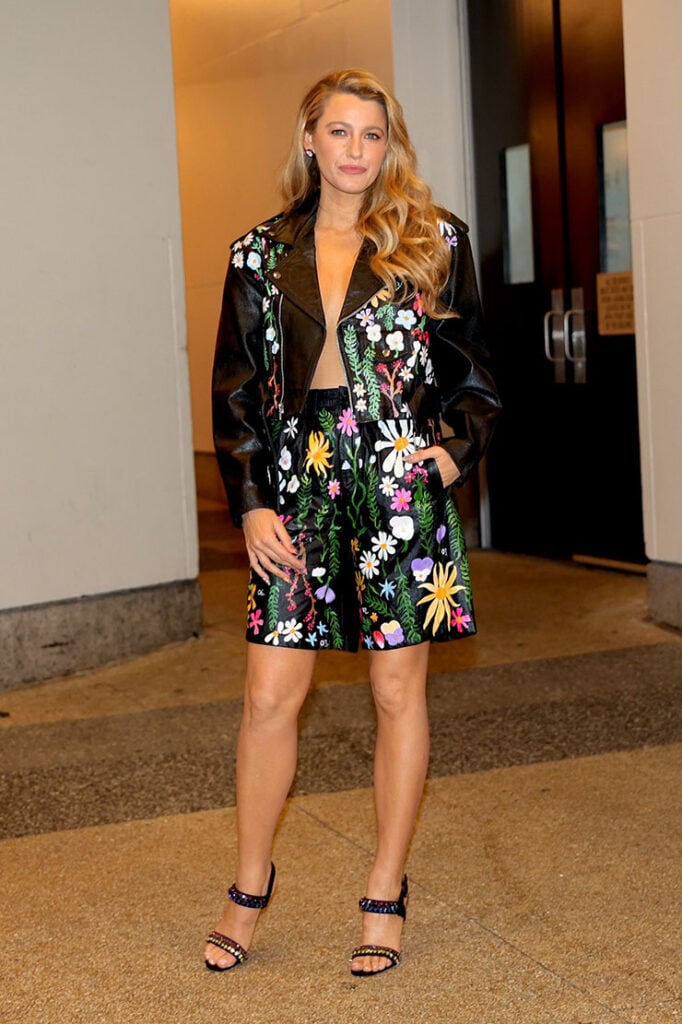

Blake Lively in Dauphinette and Oscar de la Renta promoting It Ends With Us in New York
The connection was certainly easy to understand, but the tour also demonstrated another side of method dressing.
It Ends With Us deals with domestic abuse, yet much of the fashion conversation surrounding its promotion centred on flowers and Lily’s profession. That led to questions about whether the upbeat florist theme sat comfortably alongside the film’s considerably darker subject matter.
It is an important distinction. A method-dressing reference can make perfect sense in relation to the character and still feel less appropriate when considered alongside the wider story.
Blake’s press tour for It Ends With Us showed just how far one character detail could be carried.

Using Character Codes: Lady Gaga, Joker: Folie à Deux
Lady Gaga didn’t need to reproduce Harley Quinn’s costume for Joker: Folie à Deux. Instead, her press wardrobe borrowed recognisable elements associated with the character.
Colour, hair and makeup were particularly important.
At the London premiere, Gaga’s Celine gown was paired with red hair and graphic blue eye makeup. The Harley reference was there.

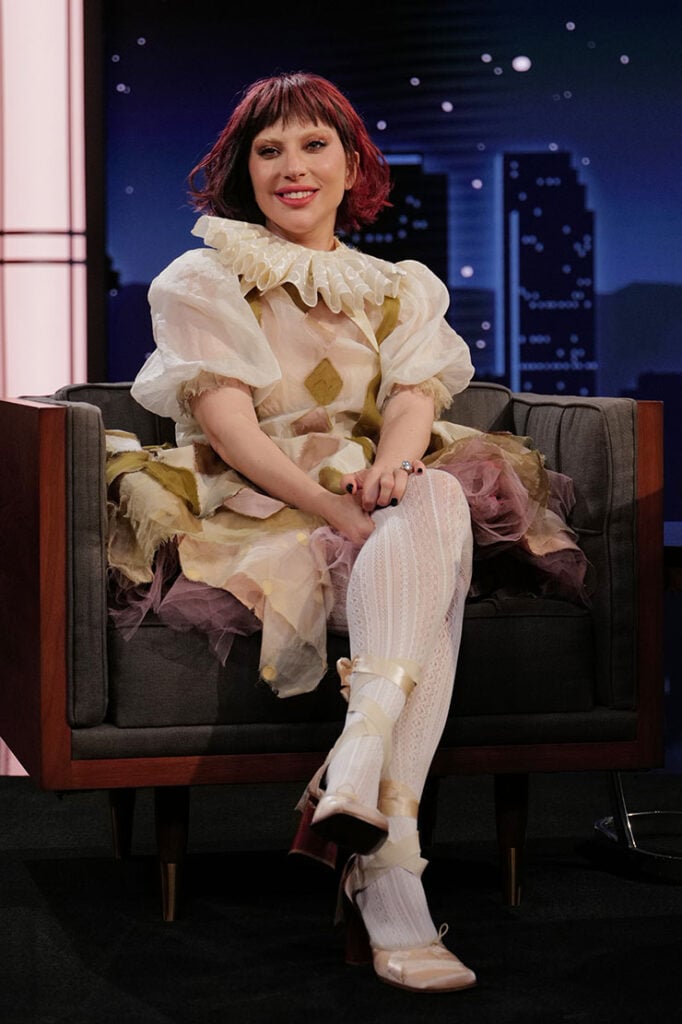
Lady Gaga in Muto Little in London and on Jimmy Kimmel Live!
Other press appearances, however, pushed the Harley reference much further, to the point where the clothes could have come directly from the costume department.
That’s what made the London premiere more interesting to me. Gaga didn’t need a literal recreation for us to understand the reference. The red hair and graphic blue eye makeup did much of the work, leaving the Celine gown to be a fashion moment in its own right.
Lady Gaga at the London premiere was one of the clearest examples of how method dressing can work without recreating the character from head to toe.
Turning the Subject Into a Dress Code: Zendaya, Challengers
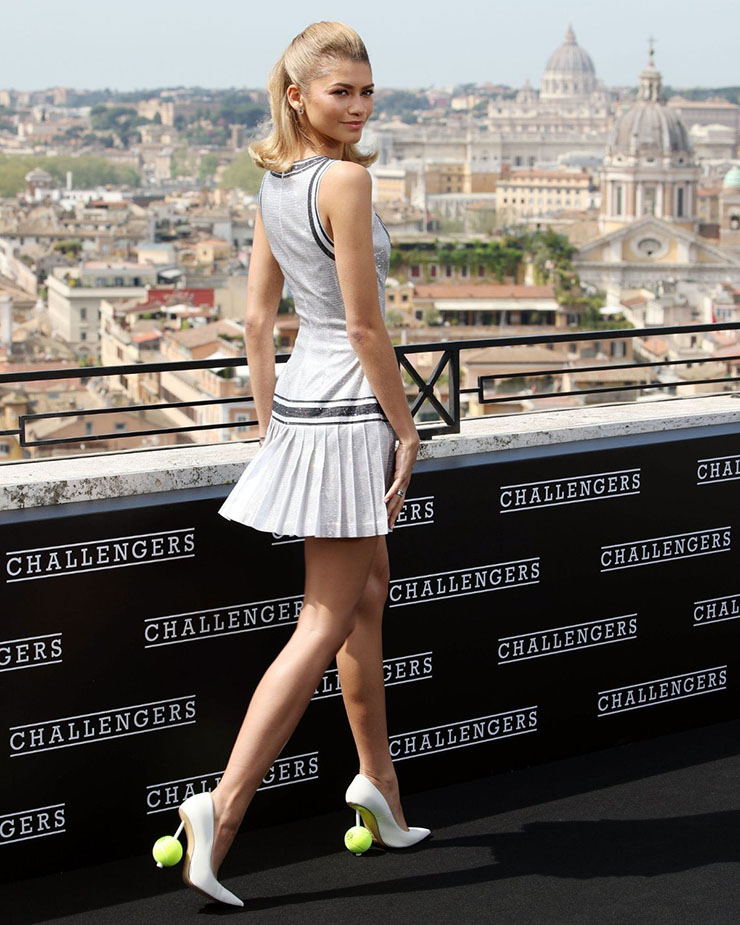
Zendaya’s Challengers press tour is frequently remembered for the Loewe pumps with tennis balls pierced through the heels, but those shoes were one playful moment within a much broader tennis story.
The real throughline was the sport itself.

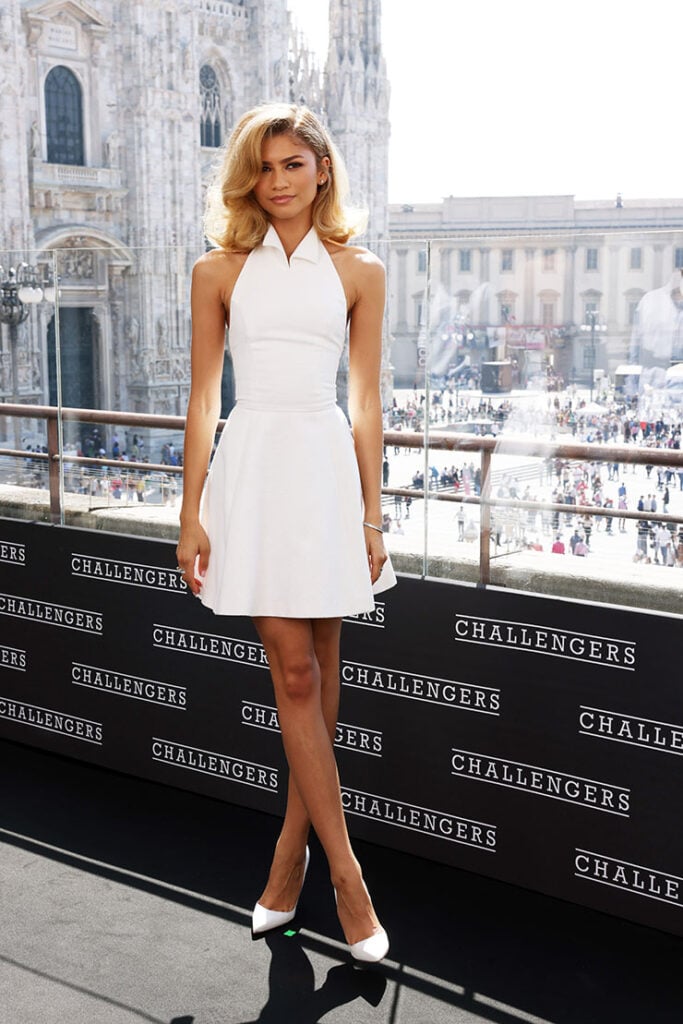
Zendaya in Thom Browne for the Challengers London premiere and Ralph Lauren for the Challengers Milan photocall
Wimbledon white dominated much of the tour, appearing through a succession of tennis-inspired dresses and sporty silhouettes. Pleating, polo details, athletic shapes and country-club references gave Zendaya and Law Roach several ways to return to tennis without simply dressing her as a player.
The Loewe tennis-ball heels at the Rome photocall were the most literal piece of the tour, and understandably became one of its most photographed details.
But they didn’t create the theme.
They worked because the tennis story was already running through the wardrobe.
Zendaya’s Loewe Challengers Rome photocall look gave us the accessory everyone remembers, but the full tour showed how much further the idea went.
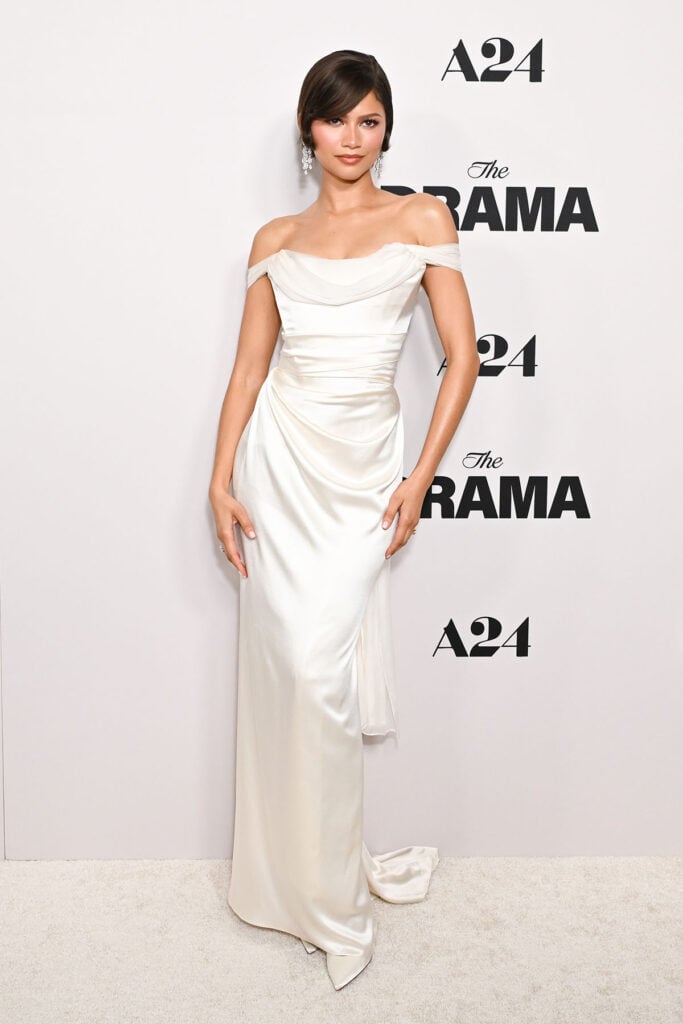
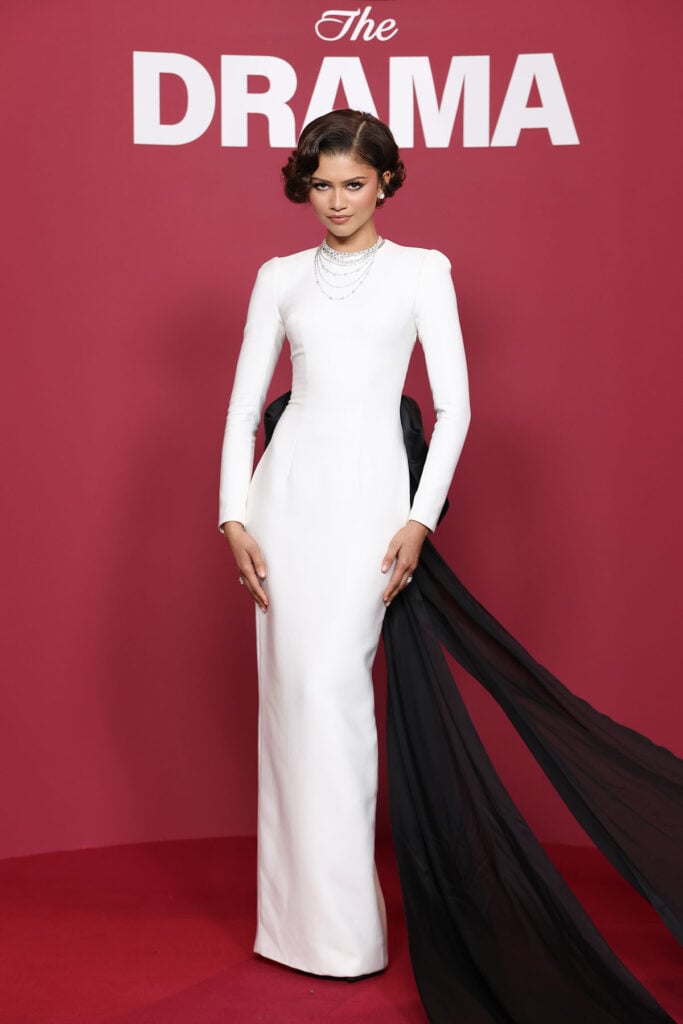
Zendaya in Vivienne Westwood for The Drama LA premiere and Louis Vuitton for The Drama Paris premiere
Dressing for the Story: Zendaya, The Drama
For The Drama, Zendaya and Law Roach found their method-dressing reference in one of the oldest wedding traditions: something old, something new, something borrowed and something blue.
With the film centred on a couple in the days leading up to their wedding, the tradition provided a way of connecting Zendaya’s press wardrobe to the story without dressing her as her character.
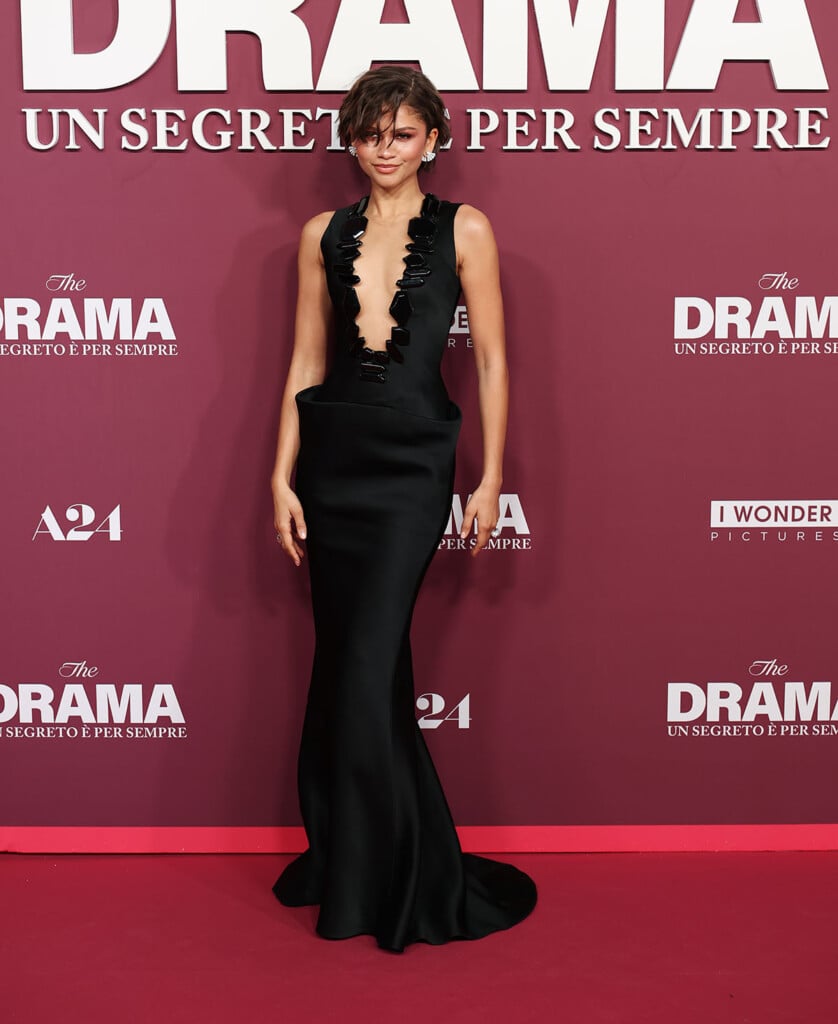
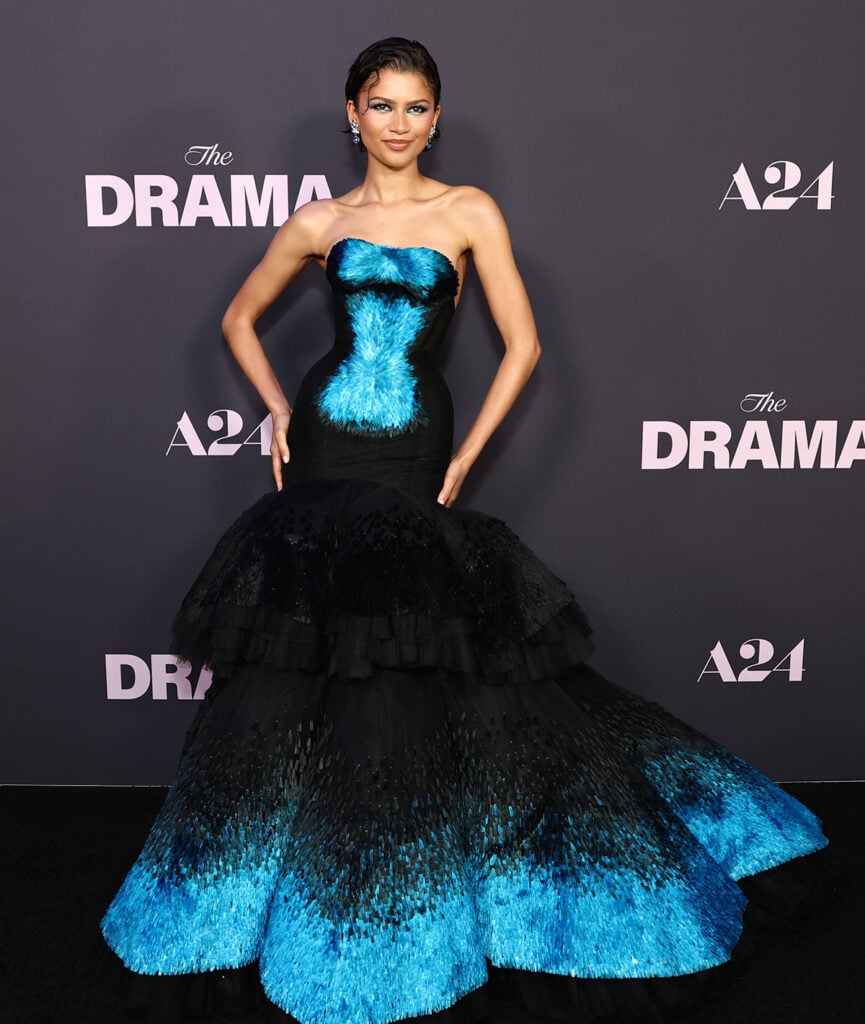
Zendaya in Armani Privé for The Drama Rome premiere and Schiaparelli Haute Couture for The Drama New York premiere
More importantly, it gave the tour several different directions to explore. “Old” came via a Vivienne Westwood dress Zendaya had worn before, while “new” was represented by a custom Louis Vuitton creation. For “borrowed,” she wore an Armani dress and jewellery previously worn by serial repeater Cate Blanchett, while “blue” provided the most immediate visual reference in a Schiaparelli Haute Couture gown.
It was a clever framework because you didn’t necessarily need to recognise the connection in every individual outfit. Once the wedding tradition was established, each look became another part of the same idea.

Dressing for the Film’s World: Zendaya, Dune
Zendaya’s Dune wardrobe approached method dressing from an entirely different direction.
She wasn’t dressing as Chani.
Instead, her wardrobe frequently referenced the futuristic, otherworldly environment of the films through metallic finishes, sculpted silhouettes, desert shades and unconventional construction.
The most famous example was Thierry Mugler’s Fall 1995 Haute Couture robot suit at the Dune: Part Two London premiere.
It had no direct relationship to Chani’s costume, but it made complete sense within the wider visual universe of Dune.
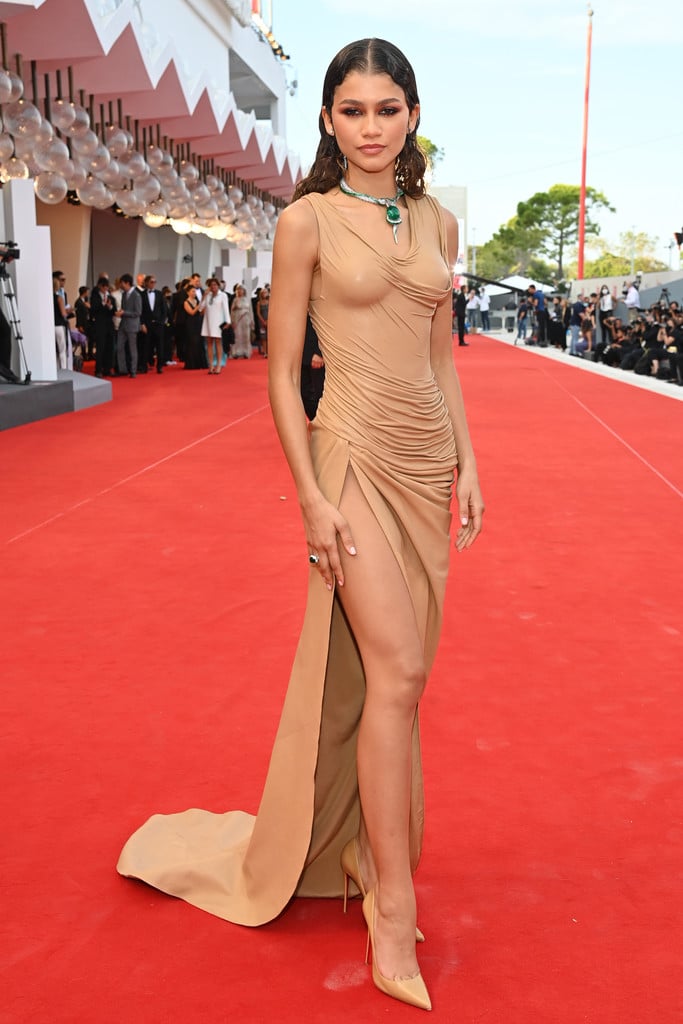
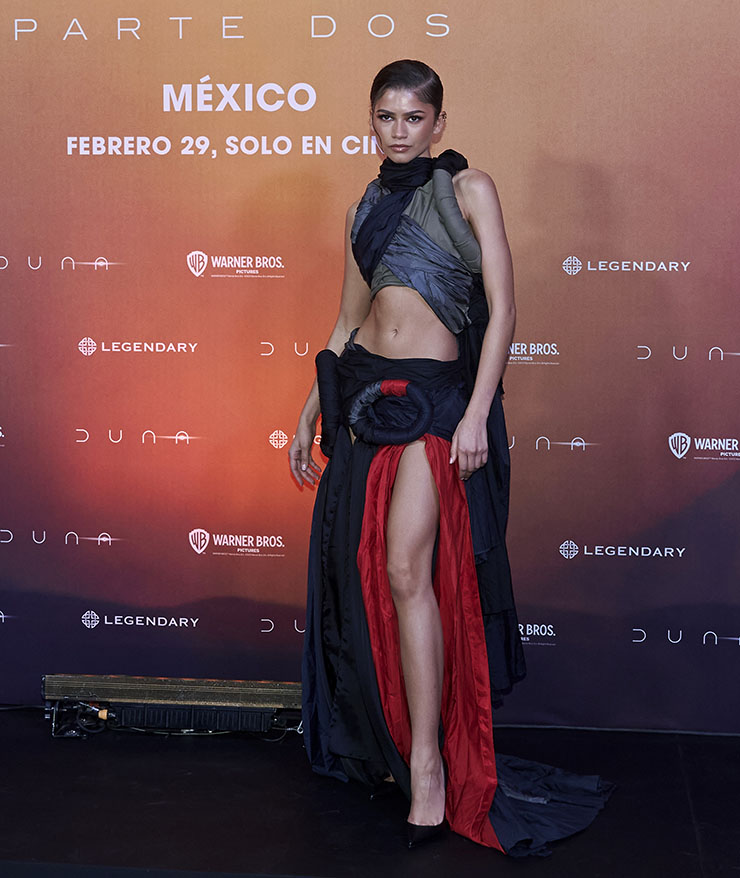
Zendaya in Balmain for the Dune Venice Film Festival premiere and Torishéju Dumi for the Dune Part Two Mexico photocall
That is an important part of method dressing that can get lost when we focus too heavily on character references. Sometimes the film itself provides the dress code.
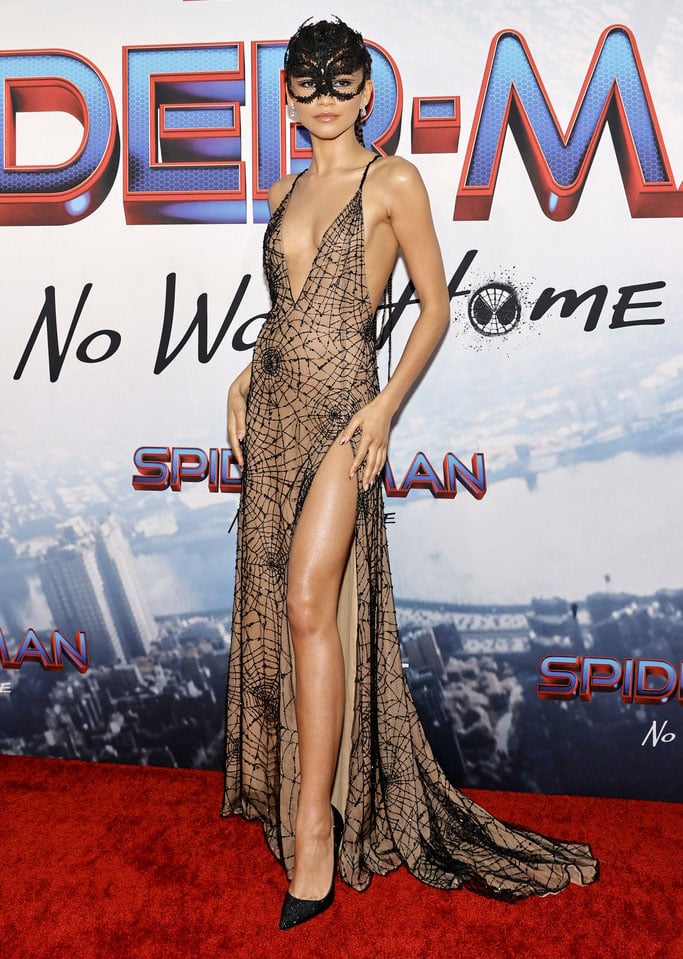
Repeating a Motif: Zendaya, Spider-Man
For Zendaya’s Spider-Man press tours, spiderwebs provided the most recognisable reference.
But even within that fairly straightforward idea, the execution varied considerably.
John Galliano, Rodarte and Armani gave us literal spiderwebs, while Christian Cowan, Louis Vuitton and Tamara Ralph offered less direct nods to the theme.
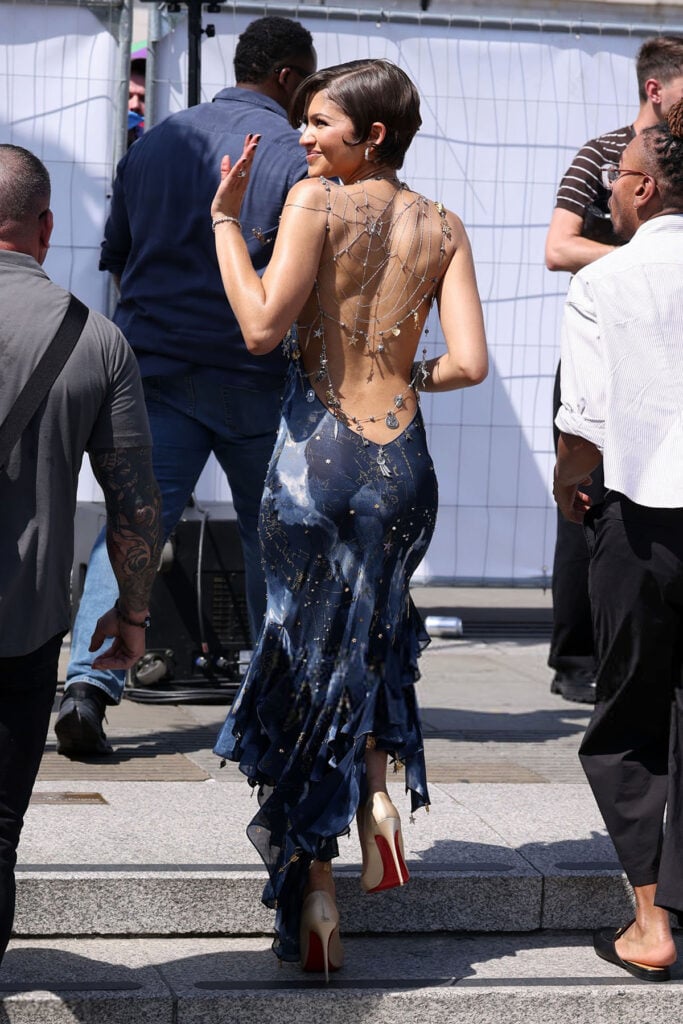
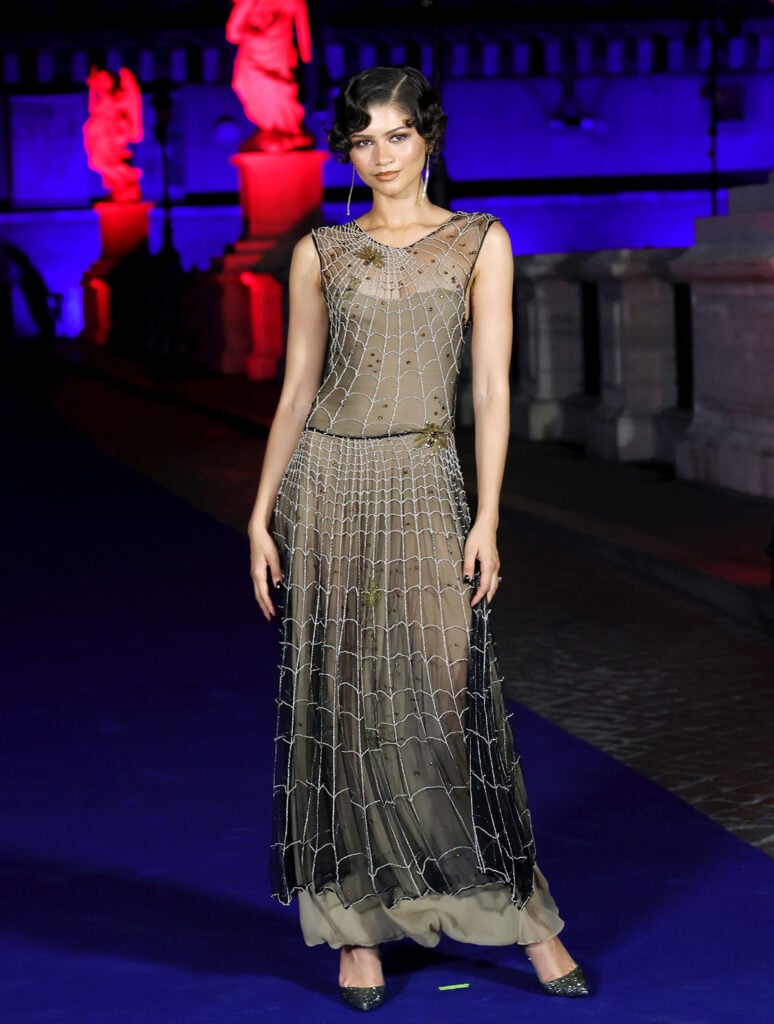
Zendaya in John Galliano for the Spider-Man Brand New Day London photocall and Giorgio Armani for the Spider-Man Brand New Day Rome photocall
That variation is what kept the motif interesting.
If every dress had arrived covered in an obvious web print, the idea would have run out of road quickly. Instead, some looks gave us the reference immediately while others asked us to look at the construction or detailing.
It is one of the clearest examples of how the same method-dressing idea can move between literal and subtle interpretations over the course of a tour.
Dressing for the Period: Margot Robbie, Wuthering Heights
Margot Robbie’s Wuthering Heights tour brought us back to method dressing from another angle.
Unlike Barbie, there wasn’t a catalogue of famous looks waiting to be recreated. The references instead came through the period, characters and atmosphere surrounding the story.
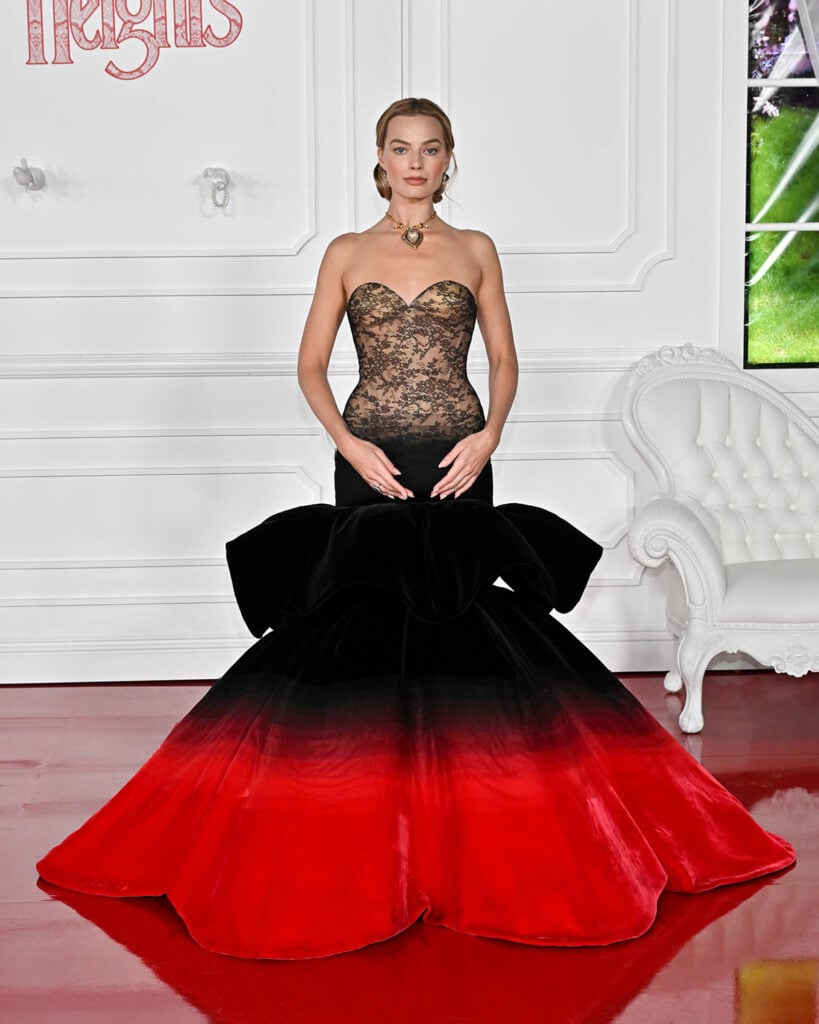
At the Paris premiere, Margot’s Schiaparelli Haute Couture gown featured corsetry and a fumato-effect skirt shifting from black into red. Other appearances continued to pull from historical silhouettes, romantic references and details connected to the film.
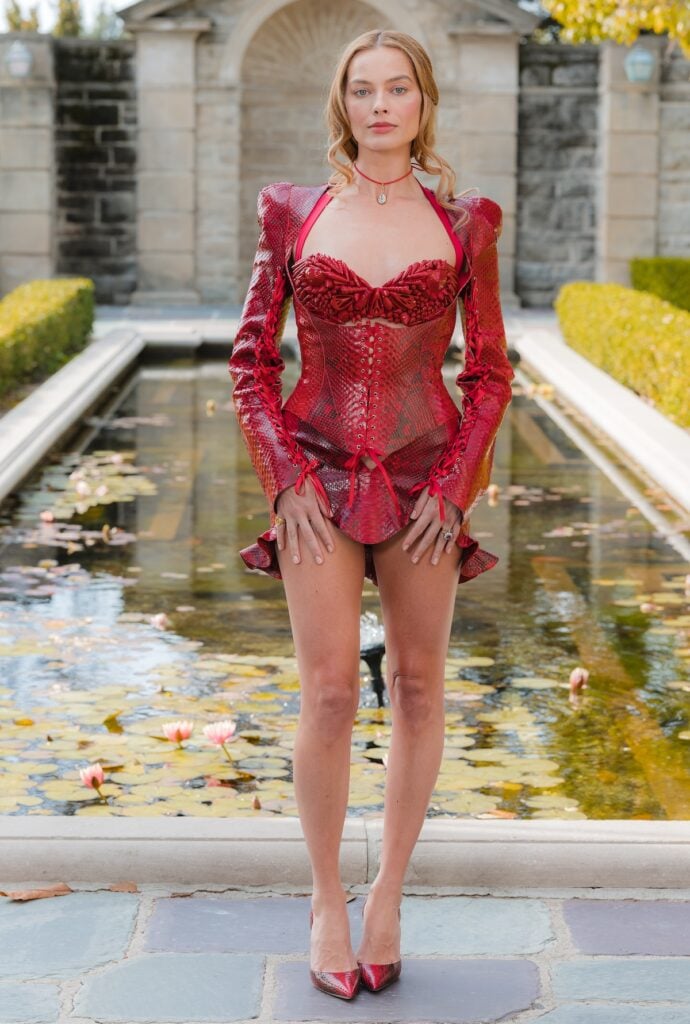
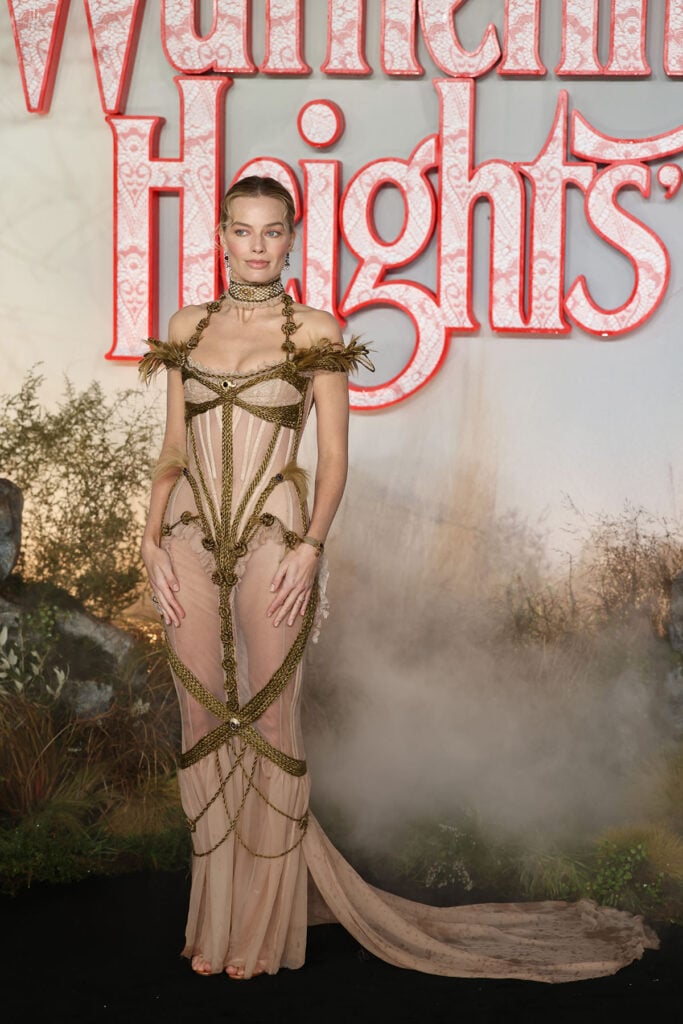
Margot Robbie in Dilara Fındıkoğlu for both the Wuthering Heights global photocall and London premiere
But this tour also raised one of the more interesting questions about method dressing.
Some references were immediately apparent. Others needed considerably more explanation before the connection to Wuthering Heights became clear.
And you noticed it. You called me out on it. Looking back at the coverage, there were moments when I may have been doing too much of that explaining myself.
If it takes a paragraph, or three, to establish why a dress relates to the film, is the reference actually doing its job?
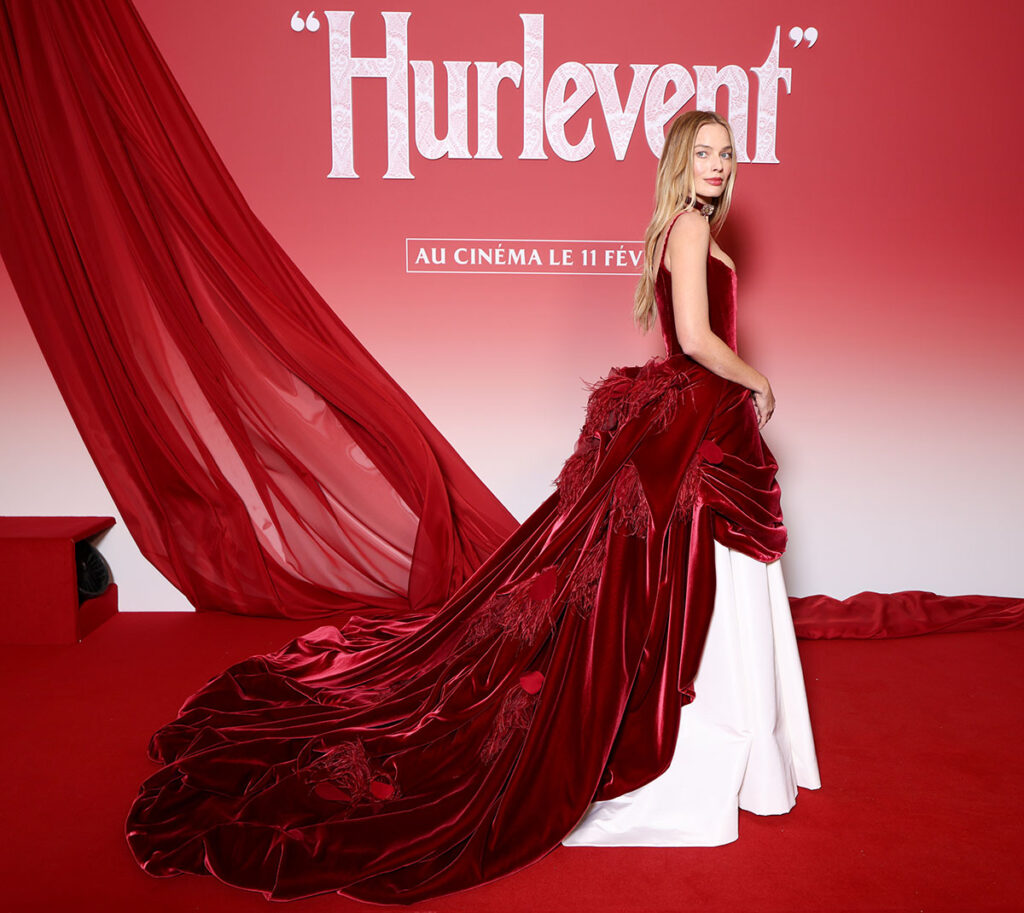
That doesn’t mean every example needs to be as literal as Barbie. In fact, the subtler connections are often more interesting. But Wuthering Heights demonstrated the fine line between a reference that rewards a closer look and one that only becomes apparent once someone tells you what you’re supposed to be seeing.
Margot’s Schiaparelli Haute Couture and Chanel gowns were one of the stronger examples because the period influence could be read directly through the silhouette.
Method Dressing in Menswear: Alexander Skarsgård and Jeff Goldblum
Method dressing is still discussed predominantly through actresses and their stylists, but Alexander Skarsgård and Jeff Goldblum show two very different ways it can work in menswear.
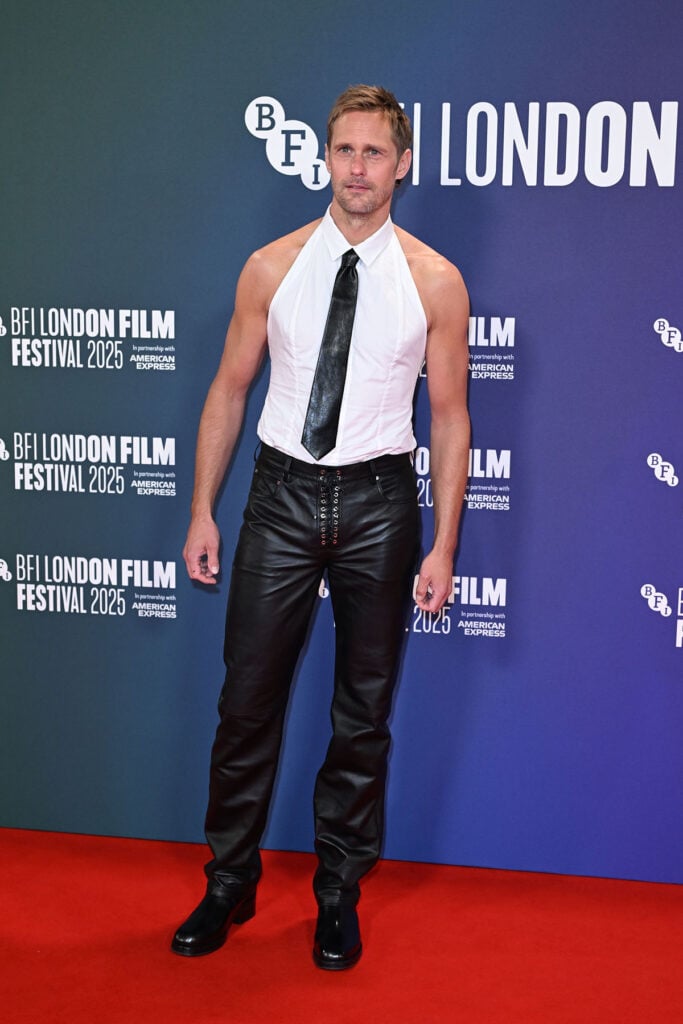

Alexander Skarsgård in Ludovic de Saint Sernin for the Pillion London Film Festival premiere and Dior for the Pillion Berlin screening
For Pillion, the film’s biker culture and dom/sub relationship provided Alexander with a clear set of references: leather, biker codes and clothes that played with sexuality and masculinity.
His Ludovic de Saint Sernin look for the London Film Festival premiere made the connection particularly clear. Lace-up leather trousers and a leather tie took elements associated with the film’s world and translated them into an event look without dressing Alexander as his character.
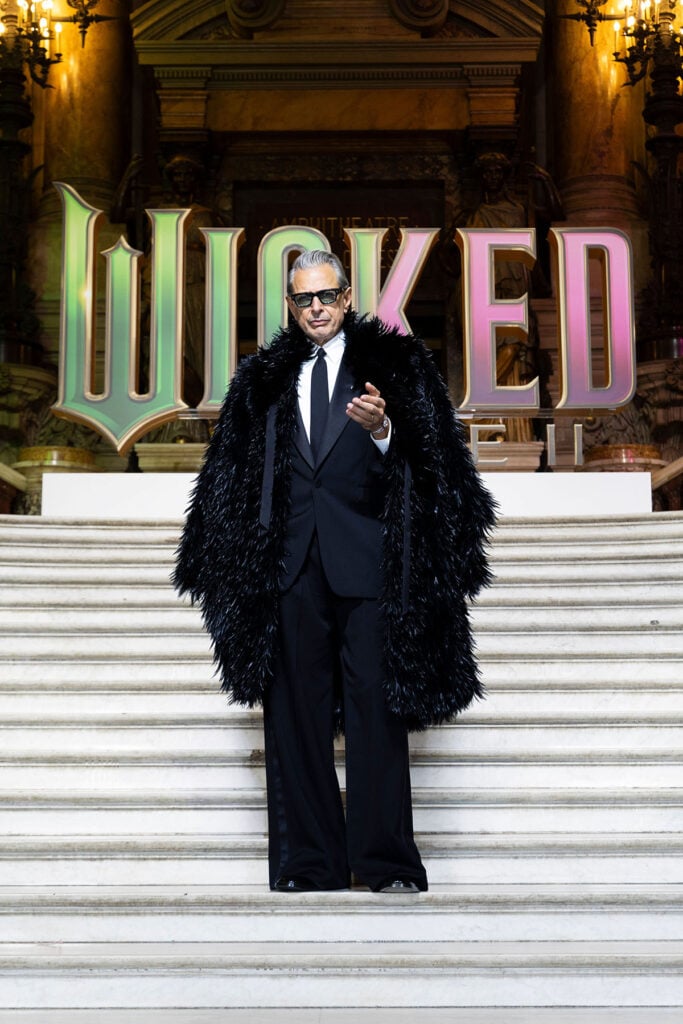
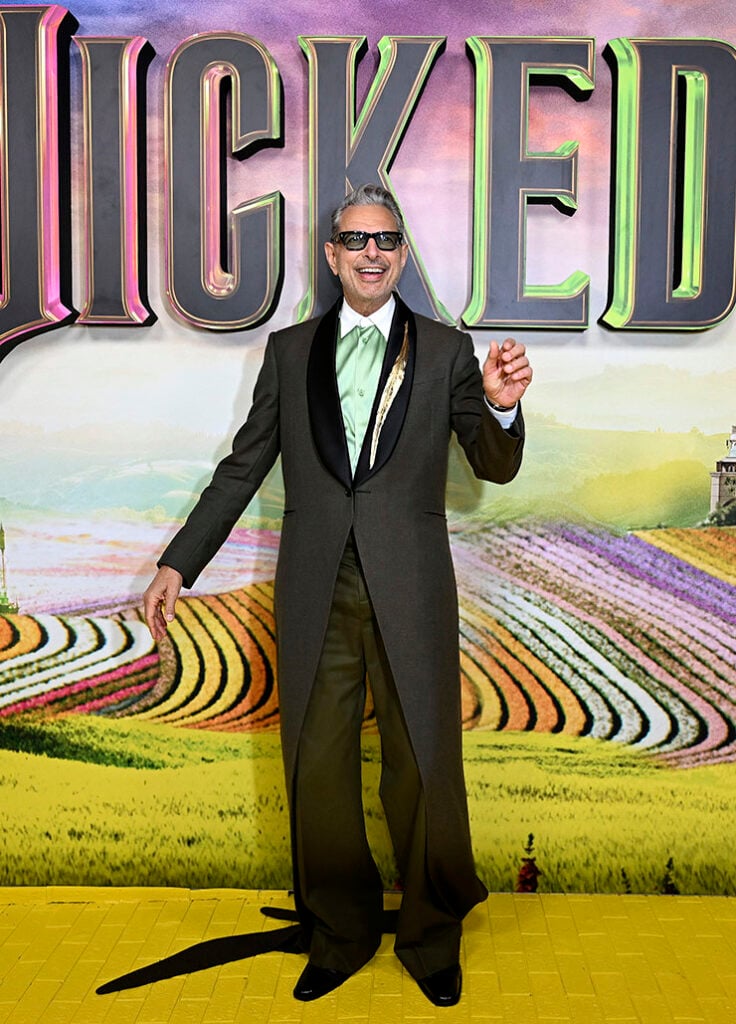
Jeff Goldblum in Saint Laurent for the Wicked For Good Paris premiere and Loewe for the Wicked For Good Sydney Premiere
Jeff Goldblum’s Wicked press tour was more difficult to separate from his everyday style. As the Wizard, coats (as capes) made perfect sense as a recurring character reference, and Jeff wore a series of them throughout the promotion. But this is also Jeff Goldblum we’re talking about. He’s such a charismatic and adventurous dresser that a dramatic coat doesn’t immediately register as a departure from his usual wardrobe.
And that’s what makes his example interesting. Sometimes method dressing doesn’t require a star to adopt a new fashion identity. The character reference can already sit comfortably within the way they dress.
With Alexander, the connection to Pillion was easy to identify. With Jeff, the line between character dressing and simply dressing like Jeff Goldblum was considerably harder to draw.
Does Method Dressing Always Work?
No, and I think this is where the conversation around method dressing has become more interesting.
Sometimes you understand the reference immediately. Sometimes knowing the film gives you an extra piece of information. And sometimes the connection is so obscure that it requires an explanation from the stylist or designer before anyone would reasonably make it.
The Wuthering Heights tour made me reconsider where that line sits.
There is nothing wrong with a subtle reference. I don’t need every Spider-Man dress covered in webs or every Elphaba look to be green. In fact, doing that would make these tours considerably less interesting.
But the clothes should give us something to work with.
If the connection exists primarily in an explanation of the look rather than in what we’re actually seeing, we may be stretching the definition of method dressing to accommodate it.
There is another problem at the opposite end of the scale.
A reference can be so obvious and repeated so often that the theme starts doing more work than the fashion. It Ends With Us demonstrated how committing to a single motif can dominate the conversation, particularly when that motif doesn’t necessarily reflect the full tone of the film.
So I don’t think the sweet spot is necessarily about being literal or subtle. It comes down to whether the reference is readable.
It should make sense once you see it, even if you need to know something about the character or story to fully appreciate it.
Theme Dressing vs Method Dressing
That also raises another question: does every themed premiere look qualify as method dressing?
I don’t think it does.
An actor wearing green once because their character is green is theme dressing. Wearing a spider brooch to a Spider-Man premiere is a reference. Wearing florals once because your character owns a flower shop is a fun connection.
Method dressing becomes more interesting when those ideas form part of a wider press-tour wardrobe.
That doesn’t mean every appearance needs to follow the theme. It means there is enough continuity across the promotional cycle for us to recognise that the clothes are participating in the storytelling.
Barbie moved through decades of doll history. Wicked established separate wardrobes for Elphaba and Glinda. Challengers repeatedly translated tennis into fashion. Spider-Man returned to spiderwebs through different designers. Dune used the wider visual world of the films.
Those tours weren’t built around one themed dress. They developed the idea across multiple appearances.
And that’s ultimately what separates the strongest method dressing from a premiere look with a clever reference.
After years of covering press tours, I don’t think method dressing succeeds simply because I can connect a dress to a film. The fashion still has to work.
The best examples give you the reference and the look.
And if I have to write three paragraphs explaining why they’re connected, perhaps that’s telling us something too.
Credits: Getty Images, BackgridUK, Splash
FTC Disclaimer: Keep in mind that I may receive commissions when you click links and make purchases. However, this does not impact my reviews.
