
Ballet Slippers, Low-Rise Denim and the New Rules of Luxury
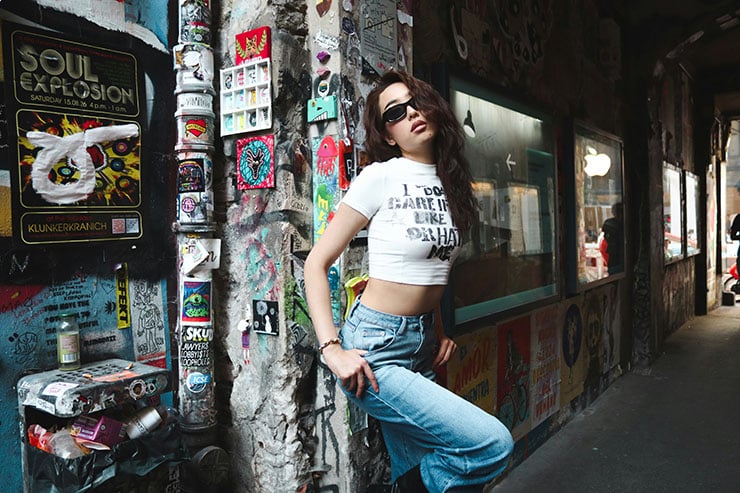
Fashion in 2026 has no single uniform. Ballet references share the rack with low-rise denim, restrained tailoring, saturated color, sheer layers, and deliberately conspicuous texture. The more interesting shift is not fashion recycling the past, it always does, but designers changing the proportions and combinations: romantic lace beside a severe coat, low-slung jeans under polished tailoring, or cobalt replacing beige as the strongest note in an otherwise restrained outfit. The useful question is therefore less about which aesthetic has “won” and more about which details can survive after the social-media label attached to them disappears.
Balletcore Grows Up
Balletcore has moved well beyond pink flats and ribbon ties. Romantic dressing in the 2026 collections includes dropped waists, lace, sheer layers, body-skimming silhouettes, bows, corset references, and clothes designed around movement rather than literal dance costumes. Cecilie Bahnsen even staged its fall 2026 collection with dancers, while Vogue connected the wider romantic mood to designers ranging from Simone Rocha and Bahnsen to Chanel, Marni, and Rabanne.
The more convincing everyday version depends on contrast. A wrap cardigan can sit beside wide trousers; a sheer skirt works differently under a structured coat; a narrow flat can soften worn denim without turning the whole outfit into rehearsal wear. Taking one recognizable code usually looks newer than reproducing the entire aesthetic from shoes to hair ribbon.
Y2K Returns With Better Proportions
Low-rise denim remains firmly in the 2026 conversation, but the strongest versions are not straightforward replicas of 2001. Vogue’s spring denim reporting places low-rise jeans beside wide-leg, bootcut, cigarette, baggy, and more tailored shapes, showing how fragmented the denim cycle has become. The low waist itself now appears across several silhouettes rather than belonging to one rigid Y2K formula.
That difference matters when building an outfit. Hip-slung denim under a longer jacket looks different from pairing low-rise jeans with every recognizable early-2000s accessory at once. A compact shoulder bag, fitted top, metallic shoe, or low waist can carry the reference alone. Too many period signals quickly turn nostalgia into costume.
Quiet Luxury Keeps the Quality, Not the Color Rules
Quiet luxury has not disappeared, and 2026 does not require abandoning understated clothes. Fine wool, controlled tailoring, discreet hardware, good leather, and pieces designed for repeated use remain commercially relevant. What has weakened is the idea that quality must arrive exclusively in beige, cream, grey, or black.
Runway and street-style reporting instead shows cobalt, red, purple, emerald, turquoise, peach, and burgundy moving through luxury fashion. Vogue has also documented younger shoppers gravitating toward more expressive color, unusual combinations, vintage references, and what it describes as loud luxury. McKinsey gives the economic shift a harder edge: its State of Fashion 2026 describes the midmarket as fashion’s fastest-growing segment, with shoppers increasingly demanding recognizable value rather than accepting higher prices as proof of desirability.
That makes construction more useful than aesthetic labels when judging a purchase. Check fiber composition, lining, seams, closures, finishing, and whether a garment can realistically be repaired. A cobalt coat can justify repeat wear through its cut and construction, while a minimalist beige knit can fail the same test. Quiet versus loud is becoming less informative than well-made versus merely expensive.
Fashion’s Visual Codes Move Onto the Screen
Color, typography, spacing, and texture influence digital interfaces for many of the same reasons they influence packaging and clothing: they establish hierarchy before a user studies the details. On a casino online interface, saturated graphics and themed artwork can make categories easier to distinguish, while a cleaner lobby reduces the amount of searching needed between games. MelBet’s current casino section groups slots alongside other gaming categories and uses visual presentation heavily as part of discovery. The styling does not alter the mathematics of an RNG-based slot: RTP remains a long-run theoretical return measure, while volatility reflects how payouts may be distributed across play. Interface design works best when game information, stakes, rules, and account controls remain easier to identify than the decoration surrounding them.
Buy the Detail, Not the Costume
Microtrends become easier to use when they are reduced to one repeatable component. Balletcore might mean a wrap neckline or sheer layer rather than a complete ballerina-coded outfit. Y2K could be a lower waist under a grown-up coat. Quiet luxury can survive as fabric quality and disciplined construction even when the color palette becomes much louder.
A simple three-outfit test exposes weak purchases quickly. Before buying, place the item mentally beside shoes, outerwear, and basics already in the wardrobe. If it works only with the exact styling used in the campaign or trend video, its useful life may be short. If it changes several existing outfits without demanding another round of purchases, the trend is working for the wardrobe rather than controlling it.
The Phone Has Its Own Dress Code
Fashion now circulates on the same small screens used for shopping, streaming, messaging, sport, and other forms of entertainment, which puts increasing pressure on interfaces to communicate quickly in portrait format. That same preference for compact navigation appears in the Melbet mobile apk environment, where the current mobile page separates Android and iOS access while keeping sports betting and casino sections available from a phone. Android users are directed to a downloadable APK, while the iOS route uses a Progressive Web App added through Safari rather than a conventional native App Store installation. The arrangement gives each operating system a distinct installation path instead of presenting one download as universal. Once inside, visual polish matters most when categories, odds, account tools, and transaction history stay legible on the smaller display.
The 2026 Palette Refuses to Whisper
Color is one of the easiest 2026 trends to adopt without rebuilding a wardrobe. Spring collections pushed strong tomato and scarlet reds, lime, violet, emerald, cobalt, and creamy whites, while fall added another run of electric blue, royal purple, peach, turquoise, and burgundy. The common thread is saturation rather than one mandatory shade.
One strong color is often enough. A cobalt bag against grey tailoring, a red knit under a brown coat, or turquoise beside denim can shift familiar clothes without making them season-specific. That restraint also leaves room for the year’s romantic layers, low-rise proportions, and louder textures to compete for attention one at a time.
FTC Disclaimer: Keep in mind that I may receive commissions when you click links and make purchases. However, this does not impact my reviews.
